Press release - Wednesday 25 February 2026
Graeae has been informed that its artistic director faces swingeing cuts to Access to Work support on the same day they close survey asking for feedback on the scheme.
Deaf director Jenny Sealey, who has led the company for 28 years and is considered a leading voice in disability arts, will have her financial support from the Department of Work and Pensions slashed by 50%. At the same time 35 disabled artists have informed Graeae they will also face cuts in tandem and suffer delays to funding of up to 15 months. This comes just before Graeae’s deadline for feedback on the Public Inquiry on the Access to Work scheme – 23:59 on Thursday 26 February 2026.
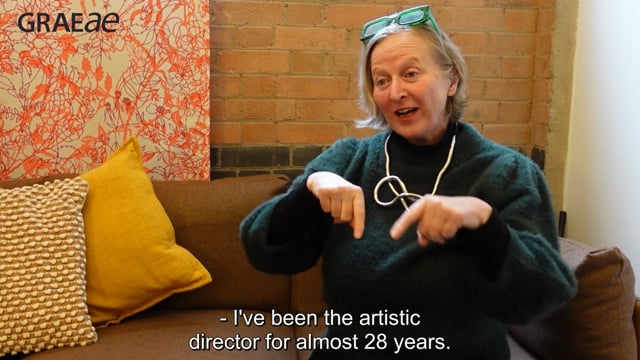
“This feels political.” says Sealey,
“Our community will not be silenced”
Jenny has been informed by Access to Work that in future they would only cover a sign language interpreter for 10 hours rehearsal per week. Production weeks are typically 47 hours in length.
In feedback on her application to Access to Work, the body claimed that Jenny’s employer has not put adequate support in place to meet her needs. They state as appropriate support was not established from the outset, it is evident that the customer struggles to fulfil the role.
Graeae, a charity that employs around 200 Deaf and Disabled people a year, about 57% of their workforce, guarantee access is provided across their activities, regardless of whether it can be reclaimed.
Across their activities, they covered £198,445 of access costs in 2024-25, £86,800 of which was re-claimed through Access to Work.
“An infringement of human rights”
Artistic Director, Jenny Sealey OBE says:
“This feels punitive. I dared speak out about the 15-month delays to the system, the battles our community are facing with each and every application, and I feel like I’m being told to get back in my box. The recommendations around how to make reasonable adjustments are an absolute insult and show no understanding of Graeae and the work I do, running a company, training, rehearsing and advocacy. I am not sure how I can do this on an 18 hour a week interpreter allowance. Graeae cannot be expected to cover interpreters for 30+ hours a week, that goes way beyond reasonable adjustment. This is an infringement of human rights.”
Executive Director, Kevin Walsh, states:
“Jenny’s work as a director and disability rights advocate is known around the world. She received an OBE for services to the disabled community. To suggest that Jenny struggles to fulfil her role is ludicrous. She has passionately and successfully led Graeae for the last 28 years and she has a right to continue to do so. Her job has not changed; it’s hard to understand why her support has changed.”
“What more can we be doing as an employer when we are already raiding our reserves to the tune of £100k a year to meet costs for staff not covered by Access to Work. Everyone has a right to a fair and accessible workspace. We are doing our bit, not just for Jenny but for all staff, participants and audiences. DWP need to re-instate this support.”
Graeae’s survey of disabled artists, which has now been re-opened to allow for more people to respond, feeds into a government survey on 15-month delays and cuts to the scheme. Sadly, Jenny’s story is one of many; respondents to our survey have reported huge cuts to their awards, without explanation or consultation, which have led to their businesses failing and to negative impacts on both their physical and mental health.
As part of their survey on Access to Work, Graeae have received comments from other Deaf and disabled artists on the impact of the cuts. These include:
“My award…was cut from 30 hours to 7! Below the minimum 20% recommendation too. My business is failing as I can’t just remove all my support at a weeks’ notice. My appeal took 9 months and was declined.”
“I now have 6 months of Support Worker expenses paid out and cannot claim these back as the award has not been renewed – this is critical for cash flow.”
“I already lost my premises with last year’s delays removing my ability to generate income for many months and as such was unable to afford overheads such as rent. I am now on the verge of losing my business entirely as I am yet again without my vital support workers.”
“I waited 8 months for a reconsideration after my award was severely cut. The letter we sent access to work was not read properly and the points we made where ATW had contradicted their own guidelines were not addressed.”
“The government said they wanted more disabled people back in to work yet they have made it almost impossible to actually work. I would be better off just claiming benefits however I want to work, I enjoy my work, so I have these expenses and barriers and am living in deficit, just because I’m disabled.”
Gallery
Statement from Jenny Sealey